
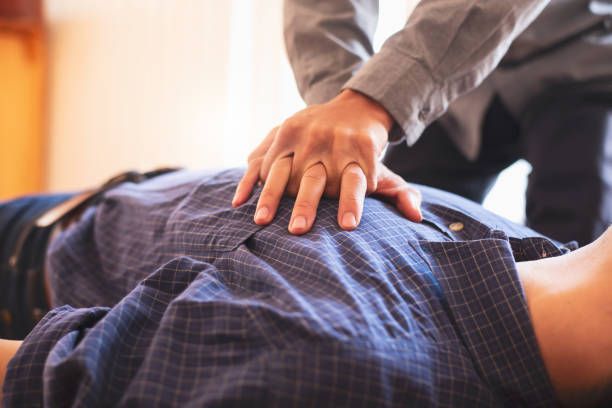
A person suddenly collapses at a park, workplace, restaurant, or home. They do not respond when you speak to them. They are not breathing normally. You call 911, but the ambulance is still on its way. What happens next? This is where CPR classes McKinney can make a real difference. Knowing what to do during those first few minutes can help keep blood moving until professional help arrives.
For many people, the hardest part is not wanting to help. It is knowing how to begin. CPR classes can give you the hands-on practice needed to recognize cardiac arrest, start chest compressions, and use an AED. These are practical skills that can matter when every minute counts.
CPR Helps Keep Blood Moving
Cardiac arrest is different from a heart attack. During cardiac arrest, the heart suddenly stops pumping blood effectively. Without circulation, the brain and other vital organs are quickly deprived of oxygen.
CPR does not usually restart the heart by itself. Instead, chest compressions help move blood through the body while the emergency response system is activated and an AED or professional treatment becomes available.
The 2025 American Heart Association guidelines recommend that lay rescuers begin chest compressions for an adult with presumed cardiac arrest. For a lone responder, the guidance is to activate the emergency response system first and then immediately begin CPR.
The First Few Minutes Matter
Imagine someone collapses at a McKinney office or neighborhood. One person calls 911 while another looks for an AED. You begin chest compressions.
You may feel unsure. That is normal. Still, early CPR can help maintain blood flow to the brain and other vital organs until EMS arrives. The American Heart Association supports immediate CPR when an adult is unresponsive and not breathing normally or is only gasping.
Starting CPR gives the person a better chance while professional help is on the way.
What Should You Do When Someone Collapses?
You do not need to perform a long medical assessment. First, make sure the area is safe and check if the person responds. If they are unresponsive and not breathing normally or are only gasping, treat it as a possible cardiac arrest.
Call 911 or ask someone nearby to call. In McKinney, emergency medical services can be requested through 911. Then start CPR.
You can provide chest compressions even if you have not received formal training. The 2025 American Heart Association guidelines support hands-only CPR for adults with suspected cardiac arrest. If you are trained in conventional CPR, you can provide breaths along with chest compressions.
What If an AED Is Nearby?
This is where another person can make the response even stronger.
If an AED is available, ask someone to bring it while you continue CPR. Turn the device on and follow its spoken or visual instructions. AEDs are designed to assess the heart rhythm and determine if a shock is appropriate.
Do not stop CPR for an extended period while someone searches for the device. The goal is to keep interruptions as short as possible.
Hands-on practice can make this process much less intimidating. Many CPR classes McKinney include AED training along with chest compressions. Learning these skills together can help you understand how the different parts of an emergency response fit together.
What Happens When EMS Arrives?
When McKinney EMS arrives, trained professionals take over emergency care. They assess the person, continue resuscitation, use advanced equipment, and provide treatment as needed. They may also transport the patient for further medical care.
Your role still matters. The CPR you started may have helped maintain blood flow before EMS arrived. Cardiac arrest care involves several steps, including early recognition, CPR, defibrillation, advanced care, and follow-up treatment. CPR helps buy time until professional care is available.
Can CPR Actually Improve Survival?
Yes. CPR can improve the chance of survival after cardiac arrest, especially when started quickly. The 2025 AHA guidelines report that survival to hospital discharge after EMS-treated adult out-of-hospital cardiac arrest was about 10.5% in 2024.
CPR does not guarantee survival, but delaying action can reduce the chance of a positive outcome. That is why CPR classes McKinney can help parents, teachers, caregivers, coaches, and workplace teams feel more prepared to respond during an emergency.
What If You Are Not Certified?
Do not assume that only healthcare workers can help. The current AHA guidelines specifically recommend chest compressions for adults with presumed cardiac arrest by lay rescuers, including people who have not received formal training.
If you have never taken a class, calling 911 and following the dispatcher's instructions is an important first step.
Why Training Before an Emergency Matters
Nobody expects to perform CPR on a friend, coworker, neighbor, or family member. That is why training matters. During a real emergency, stress can make simple steps harder to remember. Training gives you a chance to practice recognizing cardiac arrest, calling 911, performing chest compressions, and using an AED.
For McKinney residents, CPR classes McKinney can build confidence and help you feel better prepared to respond at home, work, or in the community.
When Should You Not Start CPR?
CPR is meant for a person who is unresponsive and not breathing normally. There are also situations where starting CPR may not be appropriate.
● The scene is unsafe: Move away from fire, traffic, exposed wiring, or toxic fumes and call 911.
● The person is responsive: Do not give CPR if they are awake and breathing normally.
● There are obvious signs of irreversible death: CPR is not appropriate in cases such as decomposition or injuries clearly incompatible with life.
● There is a valid DNR: Follow a known, applicable Do Not Resuscitate (DNR) order. If you are unsure, call 911 and follow the dispatcher’s instructions.
What If the Person Is Gasping?
Gasping can be confusing during an emergency. A person in cardiac arrest may make occasional gasping, snorting, or struggling sounds. This is called agonal breathing and is not normal breathing.
If someone is unresponsive and only gasping, call 911 and start CPR. Do not wait for breathing to stop completely. Untrained bystanders do not need to spend time checking for a pulse. If the person is unresponsive and not breathing normally, begin CPR and follow the 911 dispatcher’s instructions.
When Should You Stop CPR?
Starting CPR does not mean you have to continue indefinitely. Continue chest compressions until EMS takes over, the person shows signs of life or starts breathing normally, an AED instructs you to stop for analysis or shock, the scene becomes unsafe, or you become too exhausted to continue.
If the person begins breathing normally but remains unresponsive, stop chest compressions and monitor their breathing until EMS arrives.
The Bottom Line
Starting CPR before EMS arrives can help maintain blood flow to the brain and other vital organs during cardiac arrest. It does not guarantee that the person will survive, and it does not replace professional medical care. But early CPR can give the person a better chance while emergency help is on the way.
If someone in McKinney suddenly becomes unresponsive and is not breathing normally, call 911, start CPR, and use an AED if one is available. You do not need to wait until you feel completely confident.
A few minutes can matter. Knowing what to do can matter even more.